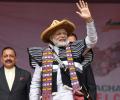
Modi's second visit to Arunachal Pradesh was vehemently opposed by China which urged India to refrain from taking any action that may "complicate" the boundary question.
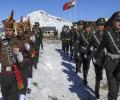
"I still have not heard a credible explanation as to why they chose to bring that size of forces to that sector of our border. Now, if peace and tranquility is disturbed and attempts are being made to change the LAC status quo unilaterally and large forces are brought to the border in contravention of written agreements, then obviously the relationship will be impacted," he said.

Official sources said withdrawal of tanks and other armoured elements from certain friction points is nearing completion while pulling back of troops from the North bank areas is being undertaken.

'We must acknowledge China will use Pakistan against India.' 'We all need to know that these two countries are ready to destabilise India at all times.'
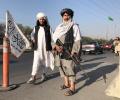
The remarks by China's deputy permanent representative to the UN, Geng Shuang, came during an emergency meeting of the Security Council on the situation in Afghanistan on Monday after the sudden and rapid takeover of the Afghanistan government by the Taliban insurgents.
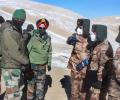
Foreign Secretary Harsh Vardhan Shringla terms India's relationship with China as "complex".
In the fresh round of talks, the Indian side is expected to press for disengagement of troops as soon as possible in all the remaining friction points besides seeking resolution of issues in Depsang Bulge and Demchok.

'Both sides should, therefore, focus on easing tensions in the friction areas by refraining from any actions that may lead to an escalation in the situation'
He said that the Communist Party of China has used the COVID-19 pandemic as a smokescreen for ratcheting up their oppression of Hong Kong and advancing their control and influence throughout the region.

The Indian side is expected to seek disengagement as soon as possible in the remaining friction points besides pressing for resolution of issues in Depsang Bulge and Demchok.

Singh, in his address to the Indian-American community in San Francisco, also sent a subtle message to the United States that New Delhi does not believe in a diplomacy of 'zero-sum game' and its relationship with one country cannot be at the expense of the other.

'China's investment destination image the world over has taken a beating, therefore investors feel India is a safe haven for investments.' 'FDI is at an all-time high in India.' 'Now after such poor ratings, this FDI amount will fall.' 'Therefore, I am saying these things are happening at China's behest.'
China routinely objects to Indian leaders' visits to Arunachal Pradesh to buttress its stand.

Four Chinese soldiers were killed in the fierce clash with the Indian Army in the Galwan Valley in eastern Ladakh in June last year, the People's Liberation Army (PLA) acknowledged for the first time on Friday.

The US president, who has expressed disappointment over China's handling of the COVID-19 pandemic, claimed that it was the "incompetence" of Beijing that led to the mass killing across the globe.

Is it is necessary to play divisive politics to succeed in the next general elections? asks Dr Sudhir Bisht.

'But unlike Bond who killed an individual, Israel is killing a nation.'

Chinese billionaire and Alibaba group founder Jack Ma is suspected to be missing following his mysterious disappearance from the public eye for over two months after Beijing's aggressive crackdown on his business empire.
There is a sense of relief in Beijing that Modi will be at the helm of affairs in Delhi at a critical juncture in the geopolitics of the region, says Ambassador M K Bhadrakumar.

By jettisoning the vision of multilateral world in favour of a Han Empire, China has posed a major long term challenge to India. India must stand firm against Chinese expansionism but also keep a door open for future detente by making a clear distinction between Chinese people and the current Chinese leadership, observe Lieutenant General Ashok Joshi (Retd) and Colonel Anil Athale (Retd).

India and China held a special round of military talks on Tuesday at the Chushul-Moldo border meeting point in Eastern Ladakh to discuss air space violations and provocations by the Chinese side in that area in the last 45 days.

The bank will have initial authorised capital of $100 billion
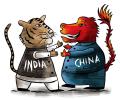
India and China achieved a major milestone this year when their bilateral trade crossed the landmark figure of $100 billion but it did not generate any fanfare in both capitals as the two Asian giants are going through a "particularly bad patch" in their relations due to a set of actions by Beijing in violation of agreements that led to the military standoff in eastern Ladakh. Starting with a modest $1.83 billion in 2001, the bilateral trade crossed $100 billion-mark in the first 11 months this year, a significant milestone for which the two countries carried out campaigns to boost trade and build it as a major stakeholder to improve the relations between two nations, whose ties otherwise remained frosty over the festering boundary dispute and strategic rivalry. According to last month's data from China's General Administration of Customs (GAC), the India-China bilateral trade totalled $114.263 billion, up 46.4 per cent year-on-year from January to November 2021.

'India's behaviour violated agreements...It's a serious military provocation'

'India needs to adopt a more proactive policy of triggering exports to China.'

The Tibetan nation still lives under the yoke of the Chinese Communist Party, and Beijing today has a guilty conscience; this creates a great uneasiness for Xi Jinping and his colleagues observes Claude Arpi.
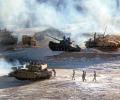
'We must be careful because China has not given its design in Eastern Ladakh.'
The 11th round of the Corps Commander-level talks began at around 10.30 am at the Chushul border point on the Indian side of the Line of Actual Control (LAC) in eastern Ladakh, they said.

The fresh round of Corps Commander-level talks took place at the Chushul-Moldo border point on the Chinese side of the Line of Actual Control in eastern Ladakh, they said.

As per the agreement reached by the two sides, India and China will withdraw the forward deployment in a phased and coordinated manner, the defence minister said.

Wang arrived in Delhi on Thursday evening in the highest-level visit between the two countries after the ties came under severe strain following the military standoff in eastern Ladakh that began nearly two years ago.

Corporate India is starting to step up its capital expenditure plans amid government incentives and signs of rising demand, company executives and analysts have indicated. This coincides with the Reserve Bank of India (RBI) recently citing a double-digit growth in private capital expenditure. Healthy balance sheets of banks and corporates, along with increasing capacity utilisation and improving business sentiment, are contributing to a favourable environment for sustained growth in private sector investments, the RBI said in its policy last week.
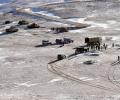
The development comes after after reaching a consensus in the 16th round of military talks, the two sides said in a joint statement this evening.
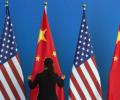
Talks between Chinese Vice Foreign Minister Xie Feng and US Deputy Secretary of State Wendy Sherman to improve the relations got off on a rough note at the northeastern Chinese port city of Tianjin, with Xie launching a blistering attack on Washington, accusing it of being the "owner of coercive diplomacy".

'The Chinese are retaining geostrategic pressure on India by keeping troops there and building infrastructure continually.'
During their hour-long in-person meeting on the sidelines of a Shanghai Cooperation Organisation (SCO) conclave in Dushanbe on Wednesday, External Affairs Minister S Jaishankar also told his Chinese counterpart and State Councilor Wang Yi that any unilateral change in the status quo along the Line of Actual Control (LAC) was 'not acceptable' to India and that the overall ties can only develop after full restoration of peace and tranquillity in eastern Ladakh.

The Army said Gen Pande witnessed Parvat Prahar exercise besides interacting with officers and troops deployed in the region. The exercise featured a display of operational capabilities by artillery guns and other key weapon systems.

After a gap of over two-and-half months, India and China on Sunday held the ninth round of military talks specifically focusing on ways to move forward on the long-negotiated disengagement process in eastern Ladakh as thousands of their troops remained deployed at friction points under freezing conditions.
"The meeting thus did not result in resolution of the remaining areas," the Army said in a statement.
'The Indian Army's surveillance had noticed the Chinese movements.' 'There was no intelligence failure.'
 © 2026 Rediff.com - Advertise with us - Disclaimer - Privacy Policy - Sitemap - Feedback - About us - Terms of use - Grievances